Teaching Dreams Teacher PNG: A Practical Asset for Creative and Professional Workflows
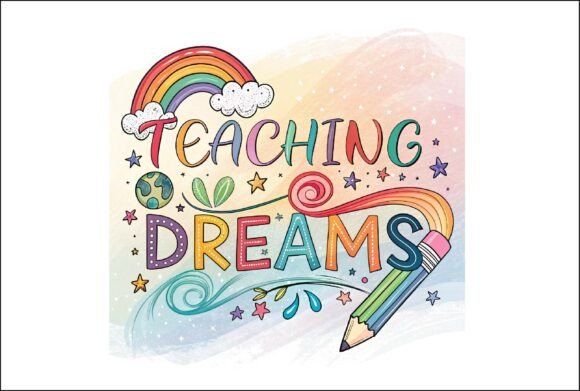
Teaching Dreams Teacher PNG is a high-resolution, transparent-background digital asset designed for seamless integration into real-world creative and professional projects. It’s not just decorative—it’s functional infrastructure. At 300 dpi and 12×12 inches, the file delivers crisp detail at print scale, making it suitable for both physical products and digital layouts. Its transparency eliminates background cleanup work, saving time during design assembly and ensuring clean layering across platforms.
Where This PNG Fits in Your Workflow
This file doesn’t exist in isolation. It enters your process where visual identity, thematic resonance, or symbolic clarity matters—often early in planning or mid-execution when refining deliverables. For educators designing classroom materials, it might appear in slide decks before a parent-teacher conference or embedded in printable handouts after curriculum mapping is complete. For small business owners launching a back-to-school merchandise line, the Teaching Dreams Teacher PNG becomes part of a batched asset library—organized alongside fonts, brand colors, and product mockups before production begins.
Unlike stock photos with restrictive licenses or generic clipart lacking emotional nuance, this PNG carries intentional symbolism: aspiration, guidance, and quiet dedication. That makes it especially useful when aligning visuals with messaging—not as filler, but as reinforcement. A blogger writing about teacher wellness might place it beside a call-to-action button; a freelance designer building a client’s educator-focused branding package might use it as a consistent motif across social banners, email headers, and presentation slides.
Compatibility and Setup: Getting It Ready to Use
You’ll need two basic tools: a computer capable of unzipping compressed files and a design application that supports PNG transparency—such as Adobe Photoshop, Illustrator, Affinity Designer, Canva (Pro), or even free options like GIMP or Photopea. No special plugins or converters are required. The file opens directly; no rasterization or flattening is needed to preserve edges or transparency.
Before importing, consider your output medium. Printing on fabric (e.g., T-shirts or tote bags) benefits from vector-based scaling—but since this is a high-DPI raster file, it holds up well up to 12×12 inches at full resolution. For larger formats, consult your printer’s guidelines: some may request resizing in advance or recommend embedding the image into a PDF/X-4 file for color consistency. On digital platforms—like Shopify product pages or Instagram carousels—the PNG loads quickly and displays cleanly across devices without extra optimization.
Practical Use Cases Across Roles
- Educators: Insert into editable Google Slides templates for professional development workshops; overlay on custom-printed lesson plan binders or laminated classroom posters.
- Small Business Owners: Apply to mockup generators (e.g., Placeit or Smartmockups) for Etsy listings of mugs, stickers, or tumblers—then reuse the same asset across Amazon Merch and Redbubble without reformatting.
- Freelance Designers: Store in a labeled “Client-Ready Assets” folder alongside brand guidelines and typography specs. Tag it in cloud storage (e.g., Dropbox or Google Drive) with keywords like “teacher-icon,” “education-png,” and “transparent-background” for fast retrieval during tight deadlines.
- Bloggers & Content Creators: Combine with subtle text overlays in Canva to create shareable quote graphics—then export as PNG again for consistent quality across Pinterest pins and newsletter banners.
- Hobbyists & Makers: Import into Cricut Design Space or Silhouette Studio for precise cut lines on vinyl stickers or iron-on transfers—no background removal step required thanks to the built-in transparency.
Quality Control and Consistency Considerations
Because actual colors may vary slightly depending on monitor calibration and printing method, treat this file as a starting point—not a final output. Always soft-proof on your target device if possible: view it on both an sRGB monitor and a mobile screen to gauge contrast and legibility. When preparing for print, convert to CMYK only if your printer requires it—and confirm whether they prefer embedded profiles (e.g., ISO Coated v2) or untagged files.
For long-term usability, rename the file clearly upon download: teaching-dreams-teacher-300dpi-transparent.png. Avoid generic names like “image1.png” or “final_v2.png”—they erode searchability and slow down future reuse. Store it in a master assets folder with subfolders by category (e.g., /Icons/Education/), not by project. That way, it remains accessible across multiple initiatives without duplication or version confusion.
Integration With Other Tools and Systems
This PNG works best when treated as one node in a broader system—not a standalone solution. Pair it with consistent typography (e.g., Montserrat for headings, Lora for body text) to reinforce professionalism. In Notion or Airtable databases tracking creative assets, log its usage per project: date added, platform used, modifications applied (e.g., “resized to 800px width for Instagram”), and notes on color shifts observed during test prints. That builds institutional memory and helps spot patterns—like which printers consistently shift warm tones cooler, prompting pre-adjustment next time.
If you use automated design tools (e.g., Printful’s API or Canva’s Brand Kit), upload the PNG once and assign it as a reusable element. That ensures visual continuity across campaigns while reducing manual placement errors. For collaborative teams, share access via shared cloud folders with edit permissions restricted to designers—keeping the original untouched while allowing derivatives to be saved separately.
Efficiency Gains You’ll Notice Right Away
Time saved isn’t abstract—it’s measurable. Removing background cleanup alone cuts 5–10 minutes per design iteration. Reusing the same trusted asset across six product types means fewer licensing checks, less vendor back-and-forth, and tighter alignment with your core message. Educators report faster turnaround on parent communications when pulling from a ready-made visual library instead of searching stock sites mid-week. Small business owners launching seasonal collections cite faster mockup cycles—going from concept to live listing in under two days because core assets were already optimized and organized.
Most importantly, consistency compounds. Using Teaching Dreams Teacher PNG across printed materials, digital ads, and physical merchandise strengthens recognition—not just of the image, but of the values it represents. That kind of cohesion doesn’t happen by accident. It happens when assets are selected deliberately, stored intentionally, and deployed systematically.
Moving Forward With Intention
Start small: open the file in your preferred editor, resize it to fit a current need (e.g., a 4×6 inch card layout), and export a test version. Print it. Compare it side-by-side with your screen. Note how the tones hold up. Then adjust brightness or saturation if needed—not as a fix, but as part of your calibrated process. Save that adjusted version separately, labeled with context (“for-mug-print-v1”). Each iteration adds fidelity to your workflow.
Over time, Teaching Dreams Teacher PNG transitions from “a file I downloaded” to “a reliable component in my toolkit”—one that supports clarity, saves time, and quietly elevates execution. That’s not marketing speak. It’s what happens when practical assets meet deliberate practice.