Damask Digital Paper, Scrapbook Paper
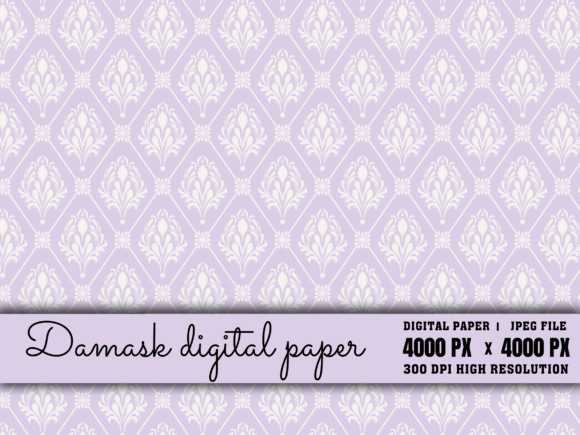
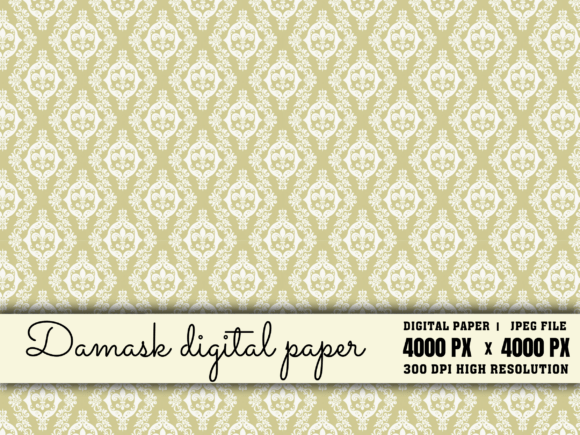
Damask digital paper, scrapbook paper refers to a category of high-resolution, digitally distributed patterned backgrounds inspired by traditional damask—a classic textile motif characterized by intricate, symmetrical, reversible designs often featuring floral, foliate, or geometric elements. Unlike physical paper sold in craft stores, this version is delivered as a digital file—specifically, a JPG image at 4000 × 4000 pixels and 300 DPI—making it suitable for both screen-based and print applications without visible pixelation.
This particular offering includes non-seamless (i.e., non-repeating) background designs. That means each file presents a single, self-contained damask pattern layout—not intended to tile infinitely across a surface. While seamless patterns are common for fabric printing or web backgrounds, non-seamless versions offer more visual variety per file and greater control over placement in layouts such as invitations or planner stickers.
People typically explore Damask digital paper, scrapbook paper when they need versatile, printable design assets that balance elegance with practicality. Common use cases include creating custom scrapbook pages, printable planners, sublimation-ready transfers for mugs or apparel, DIY greeting cards, fabric mockups, and digital presentation backgrounds. Its appeal lies not only in the timeless aesthetic of damask but also in its adaptability across creative workflows—especially for users who prefer working in software like Adobe Photoshop, Canva, Cricut Design Space, or Silhouette Studio.
One key benefit is resolution: at 4000 × 4000 pixels and 300 DPI, these files support crisp output even at larger print sizes—such as 13" × 13" at full resolution or smaller cuts like 2" × 2" planner stickers without loss of detail. The instant digital download eliminates shipping delays and inventory concerns, and commercial-use licensing allows integration into client-facing projects or small-batch product creation—provided attribution isn’t required and redistribution of the original file is avoided.
However, there are tradeoffs to consider. Because the patterns are non-seamless, users planning large-scale repeating applications—like continuous fabric yardage or wall murals—will need to manually adjust spacing or use additional editing tools to create continuity. Seamless alternatives may be preferable in those cases. Likewise, JPG format lacks transparency; if layered design work (e.g., placing text or icons over the pattern) is needed, users must either add a white or colored background manually or convert the file in editing software—unlike PNGs with alpha channels.
Another consideration is color accuracy. While the files are optimized for digital display and standard CMYK printing, slight shifts can occur depending on monitor calibration and printer profiles. Users producing professional printed goods—especially for clients—should soft-proof images and test prints before final production. Additionally, because no physical swatch is provided, tactile qualities like paper weight or texture cannot be assessed digitally, which matters for users comparing digital assets against real-world scrapbooking supplies.
This Damask digital paper, scrapbook paper is a strong fit for designers and hobbyists who prioritize flexibility, resolution, and licensing clarity—and who already have a basic workflow for importing, resizing, and applying digital assets. It suits users making one-off or limited-run items where exact pattern repetition isn’t critical: think wedding invitations with centered damask borders, planner sticker sheets with varied background tiles, or sublimation designs where the motif occupies a defined area rather than wrapping continuously.
It’s also well-suited for educators creating printable classroom resources, small business owners designing branded stationery, or content creators building cohesive visual templates for social media or digital notebooks. In these contexts, the high resolution ensures legibility and polish, while the commercial license supports monetization without legal ambiguity—so long as derivative works aren’t resold as standalone digital papers.
Alternatives may be worth considering depending on specific needs. For example, users requiring true seamless tiling—such as for textile designers developing repeat patterns for fabric manufacturers—should seek dedicated seamless damask collections, often offered in vector (SVG, AI) or tile-optimized PNG formats. Those needing transparency for quick layering might prefer PNG versions, even if file size increases slightly. And users focused exclusively on physical crafting may find pre-printed damask scrapbook paper more convenient for immediate cutting and pasting—though without the scalability or editing freedom of digital files.
Cost and sourcing are also part of the evaluation. While this digital download avoids recurring subscription fees or per-use licensing, it represents a one-time purchase with no updates or variations included. If a project demands multiple damask styles—e.g., vintage, modern, metallic, or monochrome—users should verify whether the set includes sufficient variety or whether supplemental purchases will be necessary.
Practical decision-making starts with clarifying the end use. Ask: Will this be printed? At what size and on what material? Does the design need to repeat seamlessly—or is a single, framed motif sufficient? Is transparency required for compositing? Does the project fall under commercial use, and does the license explicitly permit it? Reviewing the technical specs—4000 × 4000 PX, 300 DPI, JPG, non-seamless—alongside those questions helps determine alignment.
Also consider software compatibility. Most mainstream design tools handle JPGs without issue, but users relying on apps with limited import options (e.g., certain mobile planners or simplified craft platforms) should confirm support before purchase. File organization matters too: since these are high-resolution images, storage space and naming conventions become relevant—especially when managing dozens of patterns across multiple projects.
In summary, Damask digital paper, scrapbook paper in this format serves a clear niche: high-fidelity, commercially usable, non-seamless damask backgrounds for digital-first creators who value resolution, simplicity, and licensing flexibility. It excels where precision, elegance, and ease of integration matter more than infinite tiling or transparency. For users whose goals match that profile—and who understand the implications of JPG delivery and non-seamless structure—it offers a practical, scalable resource. For others, evaluating alternatives around tiling behavior, file format, or physical vs. digital workflow may lead to a more appropriate choice.