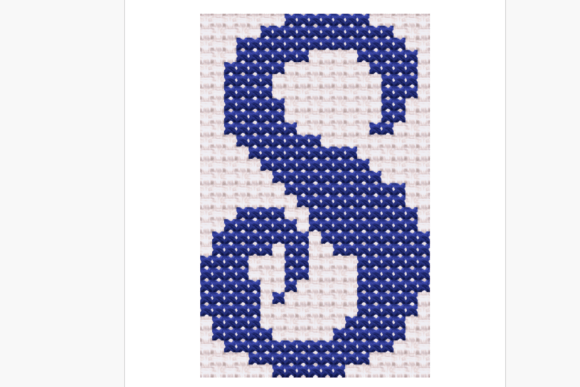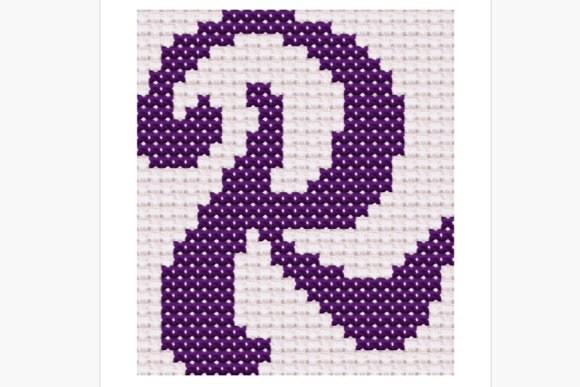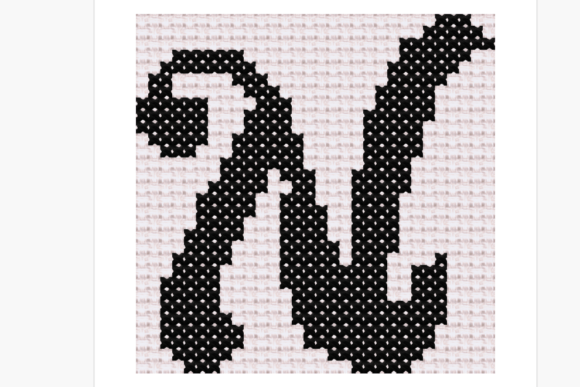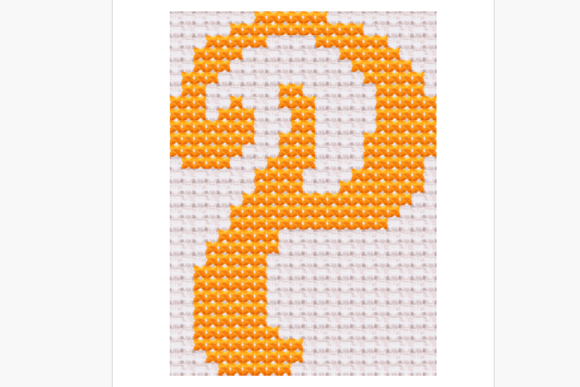
Handwritten Letter P Cross Stitch Pattern
There’s a quiet resurgence happening in handmade craft—one rooted not in nostalgia alone, but in intention. The Handwritten Letter P Cross Stitch Pattern is more than a single monogram: it’s a response to how people today seek authenticity, personalization, and tactile meaning in a digital world. This modern handwritten-style cross stitch alphabet letter pattern delivers a clean, script-inspired “P” designed precisely for today’s makers—whether they’re stitching a custom towel for a friend, embroidering initials onto a child’s backpack, or building a cohesive brand aesthetic with hand-finished details.
A Thoughtful Shift Toward Intentional Personalization
Consumers—and creators—are moving past mass-produced uniformity. A 2023 Craft Industry Alliance report noted a 27% year-over-year increase in searches for “personalized embroidery patterns” and “digital cross stitch downloads,” with monograms leading the category. What’s driving this? Not just aesthetics—but values. People want objects that reflect identity, care, and narrative. A handmade “P” stitched onto a linen napkin isn’t just decoration; it signals presence, attention, and effort. That aligns closely with broader lifestyle shifts: slower consumption, mindful gifting, and the rise of “quiet luxury” in everyday objects.
The Handwritten Letter P Cross Stitch Pattern fits seamlessly into this mindset. Its 30 x 30 stitch footprint ensures versatility without compromise—large enough to read clearly on fabric, small enough to nestle into tight spaces like ornament backs or bookmark ends. Unlike ornate Victorian monograms or rigid block fonts, this design balances legibility and fluidity. It nods to handwriting without mimicking messy imperfection—making it accessible for intermediate stitchers while still feeling distinctive to advanced crafters.
Designed for Real Workflows—Not Just Inspiration Boards
Modern crafters don’t just want pretty pictures—they need functional tools. That’s why this pattern includes an easy-to-read symbol chart (not color-coded gradients that blur on screen), a clearly defined 30 x 30 grid, and instant digital delivery. No waiting for shipping. No paper charts to misplace. Just open, print (if desired), and stitch—on your timeline.
This reflects how creative workflows have evolved. Many users layer digital tools into analog practice: referencing a PDF chart on a tablet mounted beside their hoop, using embroidery apps to track progress, or sharing finished pieces on Instagram with hashtags like #stitchwithintention. The pattern’s clean structure supports those habits—it’s optimized for screen readability and scales well across devices. And because it’s part of a larger handwritten-style alphabet series, stitchers can mix and match letters confidently, knowing proportions, stroke weight, and spacing remain consistent across the set.
Where Simplicity Meets Strategic Customization
Businesses and side-hustlers are taking note. Etsy sellers embedding monograms into product listings see higher conversion rates—especially when personalization feels effortless for the buyer *and* the maker. A café owner might use the “P” to stitch “Pumpkin Spice Season” onto seasonal aprons. A teacher could personalize student bookmarks with first initials—no custom font licensing, no vector design software required. A freelance designer might incorporate the motif into a client’s brand toolkit as a tactile extension of their logo.
What makes this practical isn’t just the design itself—but how it reduces friction. No physical item ships, which means lower overhead, instant fulfillment, and zero inventory risk. For educators teaching cross stitch basics, the 30 x 30 size offers a manageable first project: enough stitches to build rhythm and confidence, but not so many that momentum stalls. For professionals integrating craft into wellness or team-building workshops, it’s a low-barrier entry point—requiring only floss, fabric, and a needle.
Why Handwritten-Style Letters Are Gaining Ground
Script fonts have long been associated with elegance—but today’s handwritten-style cross stitch alphabet letter pattern reflects something subtler: warmth without affectation. Think less calligraphy demo, more “note passed in class.” It avoids the stiffness of machine-generated fonts while staying legible at small scale—a balance many digital typefaces struggle to achieve, especially when translated to thread.
This evolution mirrors broader design trends: the preference for human-centered interfaces, the rise of “imperfectly perfect” branding (see: Duolingo’s expressive illustrations or Glossier’s unfiltered social feed), and even the popularity of analog tools like fountain pens and bullet journals. People aren’t rejecting technology—they’re seeking contrast. The Handwritten Letter P Cross Stitch Pattern lives in that space: digitally delivered, physically made, emotionally resonant.
Practical Tips for Getting Started
- Choose your base wisely: Aida 14-count fabric works reliably for this scale—giving clear grid definition without overwhelming detail. Evenweave linen offers a refined finish for gifts.
- Test contrast first: Print a small section of the chart and hold it next to your chosen floss colors. Light gray on ecru linen reads differently than black on navy cotton.
- Stitch in sections: Work the downstrokes first (the vertical elements of the “P”), then fill curves. This builds muscle memory for the script rhythm before tackling loops.
- Pair intentionally: Use this “P” alongside coordinating motifs—tiny hearts, minimalist leaves, or geometric borders—to create layered yet uncluttered compositions.
Beyond the Single Letter: Building a Personalized Toolkit
While the Handwritten Letter P Cross Stitch Pattern stands strongly on its own, its real value multiplies when viewed as part of a system. As more stitchers collect individual letters, they begin assembling bespoke alphabets—curating combinations that reflect voice, audience, or purpose. A therapist might stitch affirmations (“Peace,” “Present,” “Patience”) on cloth journal covers. A wedding planner could offer monogrammed guest favors using the couple’s initials. A blogger documenting slow living might feature the “P” in a series on “practical beauty”—pairing each letter with a sustainable material or mindful technique.
This pattern doesn’t ask you to commit to a full alphabet purchase upfront. It invites experimentation—low-risk, high-reward. You can test the style, assess how it translates to your preferred materials, and decide whether to expand. That flexibility respects both time and budget—two resources creatives consistently cite as scarce.
Realistic Expectations, Meaningful Outcomes
Let’s be clear: this isn’t about crafting perfection. It’s about choosing a “P” that feels like *you*—or your recipient—without needing calligraphy training or expensive software. It won’t replace professional embroidery digitizing for large-scale production, nor does it claim to. But for thoughtful gifting, small-batch product development, classroom projects, or personal ritual, it meets a genuine need: clarity, consistency, and quiet expressiveness.
And because it’s delivered instantly as a digital file, there’s no environmental cost beyond your chosen thread and fabric. No plastic packaging. No carbon-heavy shipping. Just one clean, reusable resource—designed to be stitched, gifted, displayed, and lived with.
Final Thought: Craft as Continuity
In a moment where attention is fragmented and output is often fleeting, choosing to stitch a single “P” is a small act of continuity. It connects us to generations of makers who marked belongings, honored names, and turned repetition into rhythm. The Handwritten Letter P Cross Stitch Pattern honors that lineage—not by replicating the past, but by updating its tools for how we live, work, and create now.